The weapon behind the mirror - the submicron world of grinding electric spindles
Update time: 2025-11-05 Click: 65
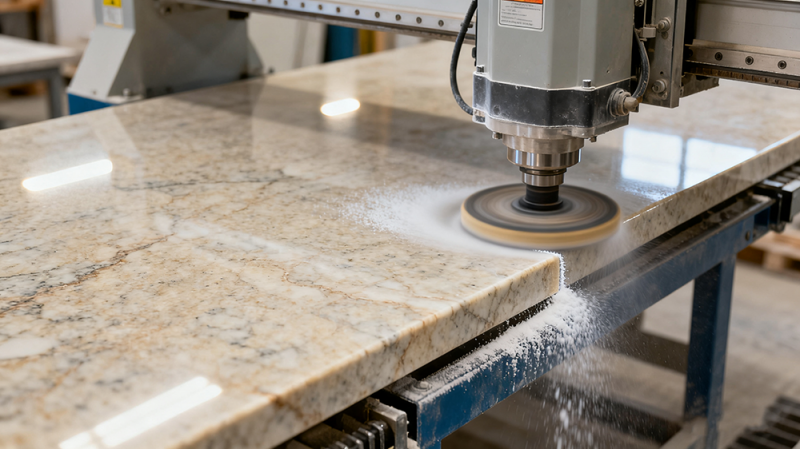
When the frame of the mobile phone requires a Ra 0.04 µ m mirror surface, and when the roundness inside the aviation bearing is ≤ 0.3 µ m, the grinding electric spindle appears. It writes "ultra-high speed, ultra-high roundness, and ultra-low vibration" into its genes: the Swiss TDM static pressure grinding electric spindle has a maximum speed of 200000 r/min, with a shaft runout of ≤ 0.1 µ m, equivalent to 1/700 of a human hair.
Static pressure bearings are the secret. The high-pressure oil film completely lifts the spindle, with zero contact, zero wear, and theoretically infinite lifespan; At the same time, the oil film damping is as high as 0.7, allowing the grinding wheel to remain "motionless" even when there is a sudden change in grinding force, achieving mirror grinding without vibration patterns.
Thermal management is equally demanding. The spindle motor, bearings, and grinding wheel rod are cooled in a three in one system, with a constant temperature of 20 ℃± 0.1 ℃ for the cooling oil, ensuring a continuous working thermal elongation of less than 1 µ m for 24 hours. Combined with an online dimension measuring instrument, 500 bearing inner circles are machined with a diameter dispersion of ≤ 1.5 µ m and a process capability index Cpk ≥ 2.0.
Motor technology continues to upgrade. Carbon fiber sleeve rotor reduces weight by 40%, decreases rotational inertia, and shortens acceleration time by 30%; Silicon nitride ceramic bearings replace steel balls, reducing temperature rise by another 8 ℃, making "higher speed and longer lifespan" a reality.
In the future, with the explosion of SiC bearings for new energy vehicles and medical zirconia ceramic joints, grinding electric spindles will move towards the limit of 300000 r/min and sub nanometer ripple, becoming an "optical gateway" for high-quality manufacturing.